From Internship Confusion to Solo Innovation: Heeraq’s Flipr Hackathon Journey

Student: Heeraq A. Kashyap
Year: 4th Year, IIT (BHU) Varanasi
Hackathon: Flipr Hackathon 29.1
Background
Some journeys begin not with a big plan — but with curiosity that refuses to stop.
That’s exactly how it was for Heeraq, a 4th-year student from IIT (BHU) Varanasi. After spending months learning web development and even interning at a Mexican web development company, he had picked up the technical skills — but something was missing.
During his internship, he often found himself stuck with doubts and no real guidance. He had seniors, but not mentors.
And when there’s no one to show you how to turn “code” into “craft,” learning can feel like running in circles.
So when Heeraq came across Flipr Hackathon 29.1 on LinkedIn, he didn’t hesitate. He noticed familiar names — mutual friends who had participated earlier — and decided, “Why not me?”
That small decision changed everything.
The Challenge
Heeraq’s biggest challenge wasn’t about technology — it was about mentorship.
He already knew how to code. But he wanted to understand how to apply that knowledge the right way — how real developers think, build, and make decisions.
At Flipr, he found exactly what he was missing: structure, feedback, and the chance to test himself in a space that felt professional yet welcoming.
The Hackathon Experience
When asked to describe the Flipr Hackathon, Heeraq summed it up in one line —
“It was the best way to start experiencing things at a professional level.”
From the moment he joined, everything felt different. The energy, the pace, the expectation — it wasn’t like college or an internship.
He had to plan, code, debug, and deliver — all within strict deadlines.
And the best part? He wasn’t competing against others as much as he was competing with himself — to see how much he could build, how far he could go.
The Project
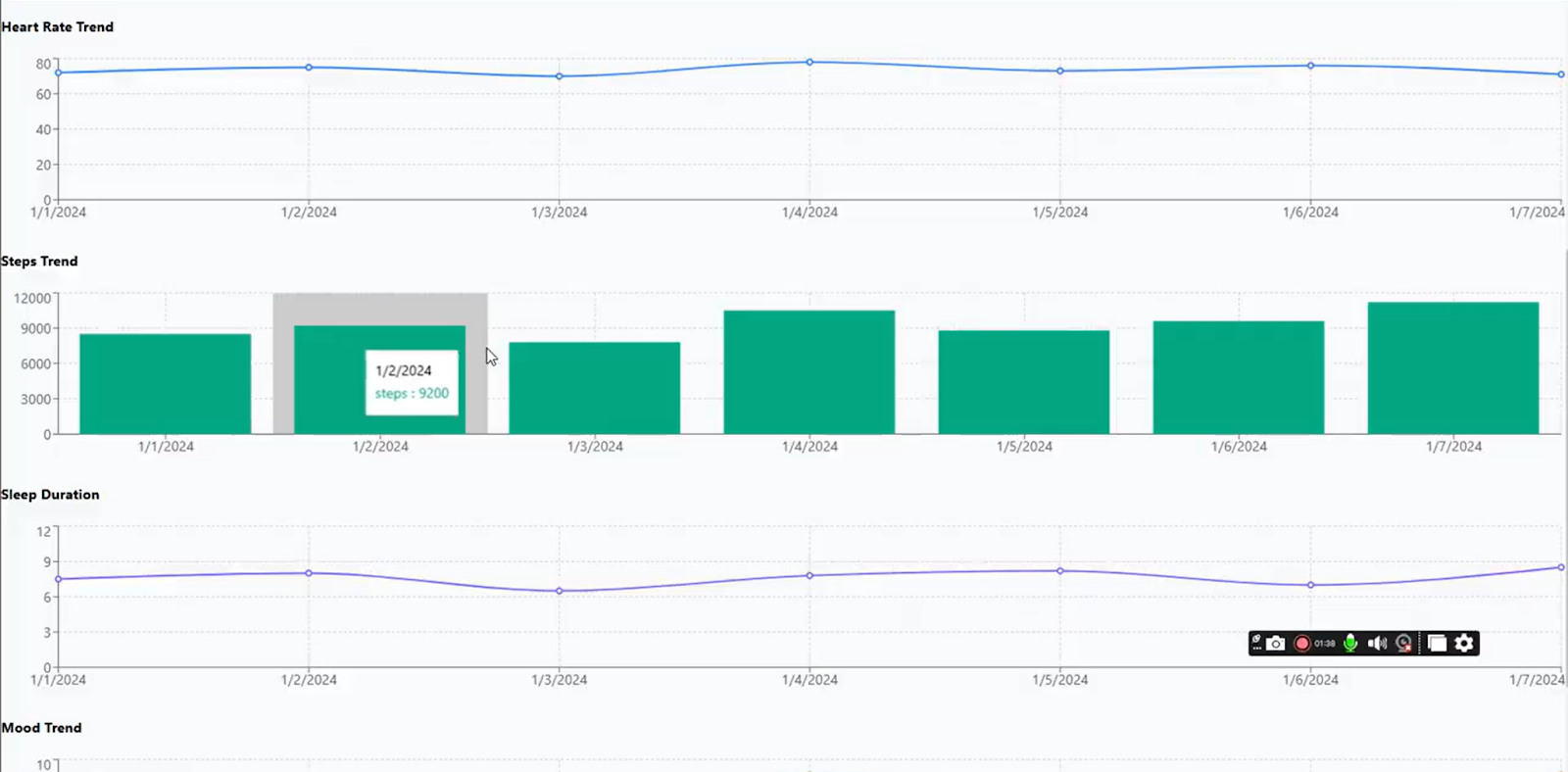
For the hackathon, Heeraq built something close to his heart — a Health Monitoring Web App.
The app, developed using the MERN Stack, Python, JavaScript, and Django, aimed to make personal health tracking smarter and more accessible.
What made this project stand out wasn’t just the tech stack — it was the fact that Heeraq built everything solo.
No teammates. No backup. Just pure focus and execution.
He handled the frontend, backend, integrations, and logic flow — bringing together multiple frameworks and languages into one functioning system.
Heeraq’s Contribution
Since he worked solo, every part of the project was his contribution.
From designing the UI to managing databases and APIs, he did it all.
But what truly defined his effort wasn’t the number of lines of code — it was the discipline he brought to it.
Balancing time, learning new frameworks mid-hackathon, and debugging on the go — that was where the real growth happened.
He learned how to manage time under pressure and how important it is to keep that competitive spirit alive even when you’re building alone.
Outcome & Reflection
By the end of Flipr Hackathon 29.1, Heeraq walked away with far more than a finished app.
He walked away with clarity.
He realized that the best learning doesn’t always come from classrooms or companies — sometimes, it comes from building something that’s 100% yours.
He now calls the Flipr Hackathon experience his turning point — the moment he stopped waiting for mentorship and started mentoring himself through building, experimenting, and failing forward.
Student Quote
“Flipr Hackathon was the best way to start and experience things at a professional level.
It pushed me to manage my time, stay competitive, and improve my skills while working solo.”
Closing Thoughts
From feeling lost during an internship to confidently building a full-stack project alone, Heeraq’s journey at Flipr Hackathon 29.1 is a reminder that sometimes, you don’t need the perfect environment to grow — you just need to start.
At Flipr Labs, that’s what we stand for.
Creating spaces where students like Heeraq can stop waiting for guidance and start discovering what they’re capable of.
Because when you build on your own — you build character, not just code.